- Industries
- B2B & Wholesale
- Promotional Products
Every order
is custom.
So is the site.
is custom.
So is the site.
Adobe Commerce, BigCommerce, and Shopify Plus, for promo distributors and custom merch. Built around proof rejection and cycle time.

Proof approved on the first send
Round 1



We’ve seen your proof queue
“Can we get this turned around by Friday?”
Three proof revisions. Two-day production. Your last agency built a portal that ignored both. Your customer ordered elsewhere.
PDPs that show product photos and never mention decoration methods
Decoration drives everything: product capability, unit cost, minimum order quantity, lead time. A PDP that hides it is a PDP that ships the wrong order.
Real-time pricing that doesn’t actually compute decoration setup, ink colors, and quantity breaks
Setup fees, run charges, color counts, and tiered quantity logic are the math of a promo cart. “Call for pricing” is the most expensive button on your site.
Minimum order quantities that the portal accepts at checkout and the production team rejects on Monday
MOQ logic belongs upstream of the cart, surfaced on the PDP. Catching it at fulfillment is how customer trust ends.
A proof-and-approval workflow that lives in email instead of the platform
Proofs are the conversion event. Most platforms treat them as customer service email. We treat them as commerce architecture.
Corporate swag programs your sales team built one-off in Shopify because the main platform can’t handle them
Branded corporate portals, recipient address collection, and approval workflows are a platform capability, not a side project glued together every quarter.
ASI / Sage / PromoStandards data that the team updates manually because the integration “is fragile”
Industry data standards exist for a reason. A catalog kept current by hand is a margin leak with a deadline.
Production capacity that nobody surfaces at the PDP, so customers commit to deadlines you can’t hit
Ready-by dates need to match real production capacity, on the PDP, before the order ships to the floor.
Kitting and bulk fulfillment that requires a sales rep to call the warehouse to confirm
Kitting rules, bulk fulfillment paths, and drop-ship orchestration belong in the platform layer, not in a Slack thread with the warehouse.
Every service, reframed for Promotional Products
Every service that turns custom
orders into a real channel.
Every service that turns custom
orders into a real channel.
Promotional products ecommerce isn’t B2B with custom logo upload bolted on. Every service below is reframed around the four numbers promo brands actually run on: average order value, order-to-ship cycle time, proof rejection rate, and corporate contract value.
01 · PDP & pricing
Decoration, minimums, and real-time pricing built into the PDP.
Where the order gets configured correctly the first time.
Adobe Commerce, BigCommerce, Shopify Plus, headless
Real-time decoration pricing
Live decoration preview
MOQ surfaced before checkout
Capacity-aware ready-by dates
Kitting + bulk fulfillment
02 · Proof workflows
Proofs as commerce architecture, not customer service email.
Where the order doesn’t ship until the customer says yes.
Proof generation + revision tracking
Multi-stakeholder approval flows
Proof comparison + version history
Structured revision feedback
Production gating on approval
Audit trail for compliance
Mobile-friendly proof approval
03 · Swag platforms
Branded portals, recipient flows, and procurement-grade workflows.
Where enterprise customers self-serve at scale.
Branded company portals
Employee recipient + size selection
Budget + approval workflows
Global account hierarchies
Recurring onboarding + recognition
HR + procurement integrations
Corporate buyer reporting
04 · Data & fulfillment
Industry data standards, ERP, and decorator routing, wired tight.
Where the catalog stays current and the orders actually ship.
ERP integrations
PIM + decoration catalog
Decorator + supplier routing
Drop-ship orchestration
Kitting + bulk fulfillment
EDI for enterprise accounts
The four-number math
Promotional products ecommerce
runs on four numbers.
runs on four numbers.
Everyone has a dashboard. Almost nobody designs around the four numbers that actually decide
whether the promo model works. Here are the four, and how we move each one.
Average order value
$400–$2,500 for SMB promo orders; $5,000–$50,000+ for enterprise programs
- Bundle and kitting modules that capture full programs, not single SKUs
- Cross-decoration upsells (front print + back embroidery + sleeve patch)
- Corporate program packaging (employee onboarding kits, event swag bundles)
- Tiered minimum quantity logic that nudges toward better unit economics
- Quote-to-cart workflows for non-catalog or large-program requests
Order-to-ship cycle time
7–15 business days for standard promo orders; rush capacity in 2–5
- Decoration-aware PDPs that prevent wrong-configuration orders
- Proof workflows that compress approval cycles (most cycles get lost in email)
- Production capacity surfacing at PDP so customers commit to realistic dates
- Drop-ship orchestration for direct-from-supplier fulfillment paths
- Automated proof generation that doesn’t require manual design touch
Proof rejection rate
15–35% of proofs rejected for revisions; healthy operators sit at the lower end
- Better real-time decoration previews (so customers see what they’re ordering)
- Logo upload validators (vector vs raster, color modes, dimension warnings)
- Color matching tools and approved-color-library logic
- Structured revision feedback that captures specific concerns
- Proof comparison tools that show before/after side-by-side
Corporate contract value
$25K–$2M+ annual contract value for managed corporate swag programs
- Branded corporate swag platforms that earn enterprise procurement approval
- Account hierarchies for global, regional, and team-level program management
- Reporting and analytics that justify the program internally
- Recurring order infrastructure for onboarding and recognition programs
- Integration with HR systems so swag flows match employee lifecycle events
Results
Show you the money.


DTC · Catalog scale
>10M
products supported
Printed skins and cases for phones, consoles, and laptops, where every design has to be carried across every device it fits.

B2B · DevOps
24/7
support and monitoring
Custom patches and emblems for the uniform and headwear trade, supported and monitored around the clock.

DTC · Performance
+33%
page speed
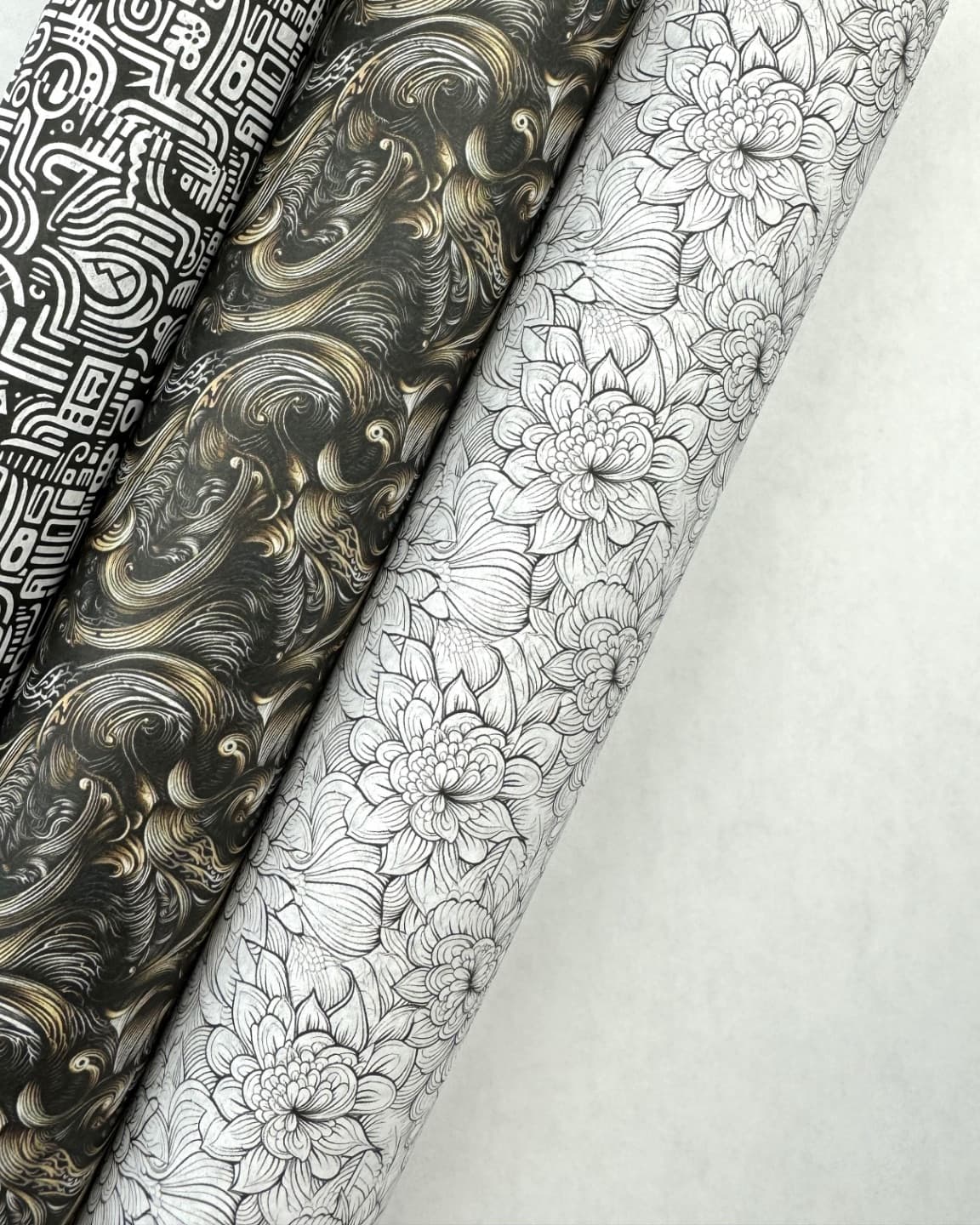
Digitally printed gift packaging, made to order with no minimums: custom tissue, bags, and labels. Page speed up 33%.
The big numbers
+30%
Avg. conversion rate lift within 12 months
+50%
Avg. order value lift
<1s
Page load speeds on the storefronts we build
+15%
Avg. revenue lift within 6 months
Before you email another agency
Here are your other options.
There are forty agencies and SaaS vendors pitching you. Here’s the honest version of what each path actually looks like for a promo industry brand.
WE GOT THE WHOLE PACKAGE
There’s a lot more
to this story.
There’s a lot more
to this story.
Design, development, and digital marketing all live under one roof. The same team that builds your store also designs it and runs the paid, lifecycle, and CRO work behind it, so nothing gets lost in a handoff.
The whole pitch in four steps
Here's what happens
after you fill out the form.
after you fill out the form.
Sales replies within one business day. A senior
strategist on the first call. Promise.
Step 01
30-min
discovery callA strategist, B2B engineer, and account lead. Your decoration methods, your corporate mix, and the numbers that matter.
Step 02
Free site audit
Storefront, PDPs, proof workflow, corporate platform, and ERP. Audited in 5 days. Yours to keep.
Step 03
Scoped
proposalScope, timeline, pricing: fixed-fee or T&M. No surprises.
Step 04
First wins inside
30 daysQuick wins on PDP, proof workflow, and pricing before the deep work begins.
THE QUESTIONS YOU HAVE -
Get them out
of the way.
of the way.
Adjacent verticals
If promotional products isn't the only fit, try these.






















Not sure which fits?
Let's audit your storefront.
Fill this out. Within one business day, you’ll hear from a senior strategist with either "yes, here’s what’s next" or an honest recommendation for someone better suited to your brand. (Yes, that happens.)