- Industries
- Automotive
Parts, gear,
and whatever
bolts on.
and whatever
bolts on.
Shopify Plus, BigCommerce, and headless, for DTC and B2B automotive brands. Built around fitment accuracy and installer AOV.

Avg. fitment-driven reduc.
−6pts






We’ve seen the whole automotive catalog
“Said it would fit
my truck.”
my truck.”
Every automotive customer service rep has typed that response back 200 times this month. Every CFO has watched the return rate it produces. Fitment is the failure everybody can name, and it is only the first one this category gets wrong. Your last agency made the homepage prettier. Nobody touched the parts of the site that actually decide whether the customer comes back.
A fitment selector that says “compatible” and the customer’s truck doesn’t match
“Fits F-150” isn’t enough. Sub-model, trim, and engine-variant logic is the difference between a kept order and a fitment return.
YMM data that the team updates quarterly and the catalog updates daily
YMM should sync with the catalog, not lag it. We architect the data flow so fitment claims match real fitment at all times.
A return rate driven by fitment errors that quietly costs 10 to 15 points of margin
60–75% of automotive returns are fitment-driven. The math is brutal at this category’s freight and re-stocking economics, and almost no agency designs to prevent it.
Universal-fit products pushed through a vehicle selector they never needed
Chargers, detailing chemicals, tools, floor liners, cargo gear. A large share of the automotive catalog doesn’t need a YMM gate, and putting one in front of it costs you the sale.
VIN lookup that “is on the roadmap”. It’s been on the roadmap for two years
VIN decoder + real fitment validation is a production system, not a plugin. We ship it across the catalog, including pre-cart confirmation.
Installers and jobbers ordering through email and a fax machine because the B2B portal is unusable
Adobe Commerce, BigCommerce B2B, and Shopify Plus B2B all do this right when built right. Tiered pricing, build-list, saved-vehicle, quick reorder, net-terms.
PDPs that look like Pinterest and don’t surface a single spec, dimension, or compatibility note
Automotive buyers convert on specs, install difficulty, required tools, and compatible accessories, not lifestyle photography.
Oversized, hazmat, and core-charge orders quoted at checkout like a flat-rate box
Bumpers, wheel-and-tire packages, body panels, batteries, aerosols. LTL rules, hazmat handling, and core returns belong in the cart, not in a support thread after the order lands.
Marketplace ads bleeding margin while DTC sits with half the catalog uncategorized
Amazon and eBay Motors are real channels here, and so are your dealers and retail partners. Catalog hygiene, MAP enforcement, where-to-buy, and DTC parity work as one program, not four.
Compliance data buried in a PDF nobody opens before they buy
CARB and EPA emissions status, DOT markings, Prop 65. California buyers and professional shops filter on it, and a wrong claim is a returned order at best.
Connected devices and subscriptions bolted onto a storefront built for one-time parts orders
Activation, device-plus-plan bundling, and account management are their own flows. A parts checkout doesn’t run them, and the churn shows up in month two.
Repeat buyers who built a relationship and then disappear because the lifecycle never recognized them
Customer-vehicle profiles, compatible-accessory flows, replacement-parts cycles. The system should remember what they drive.
Every service, reframed for automotive
Every service that gets fitment,
installers, and the repeat buyer right.
Every service that gets fitment,
installers, and the repeat buyer right.
Automotive ecommerce isn’t general ecommerce with car photos. Hard parts live or die on fitment. Accessories, tools, chemicals, and connected devices live on merchandising, freight, and the account behind them. Every service below is reframed around the four numbers automotive brands actually run on: fitment accuracy, return rate, installer/jobber AOV, and the repeat buyer.
01 · Storefront, fitment & catalog
YMM, VIN, and sub-trim logic. Built across the catalog.
Where the right part finds the right vehicle, and the rest of the catalog still sells.
Shopify Plus, BigCommerce, Adobe Commerce, headless
YMM selectors + sub-model variants
VIN lookup + fitment validation
Fitment + specs PDPs
Wrong-fit prevention at cart
Universal-fit + accessory merchandising
Oversized + hazmat freight rules
CARB, EPA, and Prop 65 compliance data
Large-SKU catalog management
02 · Installer & B2B
Real portals, not a fax line.
Where the wholesale half of the business actually lives.
Installer + jobber portals
Tiered pricing for pros
Quick reorder + saved-vehicle workflows
Net-terms billing + approvals
Volume pricing + kit assembly
Dealer locator + where-to-buy
ERP integrations
03 · Marketplace, retail & paid media
Amazon, eBay Motors, your dealers, and the install-video crowd.
Where new customers come from.
Amazon + eBay Motors integrations
MAP monitoring + enforcement
Paid social for enthusiast discovery
Paid search + Shopping
Creative production
YouTube demand-gen + build content
Performance Max + feed management
04 · Connected & subscription
Devices, plans, and the account behind them.
Where a hardware sale turns into recurring revenue.
Device activation + onboarding
Device + plan bundling
Subscription billing + upgrades
Account + vehicle management
Warranty, RMA, and replacement
Churn + win-back lifecycle
05 · Lifecycle & repeat-buyer
The system should remember what they drive.
Where the build-customer becomes a lifetime customer.
Customer-vehicle profiles + saved builds
Compatible-accessory recommendations
Replacement parts lifecycle
VIP + loyalty mechanics
Install support + warranty
Repurchase + upgrade flows
The four-number math
Automotive ecommerce runs
on four numbers.
on four numbers.
Everyone has a dashboard. Almost nobody designs around the four numbers that actually decide whether
the automotive model works, across parts, accessories, and devices. Here are the four, and how we move each one.
Fitment accuracy
92–97% fitment accuracy for healthy automotive brands; the rest is your return rate
- YMM data infrastructure that updates with the catalog, not on a quarterly cycle
- VIN lookup integration with real fitment validation (not just decoder output)
- Sub-model, trim, and engine-variant logic for categories where it matters
- Customer-vehicle profiles that prevent wrong-fit purchases across the buying cycle
- Cross-reference and superseded-part data surfaced on PDP
Return rate (fitment-driven)
12–22% for online automotive, with 60–75% of returns driven by fitment
- Better fitment infrastructure addresses the root cause
- Pre-purchase compatibility confirmation (re-state the vehicle at add-to-cart)
- Install difficulty and required-tools surfacing so customers self-select correctly
- Photo and video review surfacing focused on real fitment outcomes
- Returns dashboards that surface SKU-level fitment problems to product teams
Installer / jobber AOV
3x–6x DTC AOV for healthy installer/jobber programs
- Real B2B portals with build-list, saved-vehicle, and quick-reorder workflows
- Tiered pricing structures that incentivize larger orders
- Kit and bundle assembly for common install jobs
- Net-terms billing that matches how shop accounts actually buy
- Sales rep enablement that closes inquiry-to-order faster
Repeat-buyer rate
35–55% within 24 months for healthy automotive DTC brands
- Customer-vehicle profile infrastructure (the system remembers what they drive)
- Compatible-accessory and “complete the build” lifecycle flows
- Replacement parts and consumable lifecycle for predictable wear items
- Vehicle-ownership-cycle-aware flows (oil changes, brakes, tires, seasonal items)
- Loyalty and VIP mechanics tuned to enthusiast and pro repeat patterns
Results
Show you the money.
- View case study: Noco case study
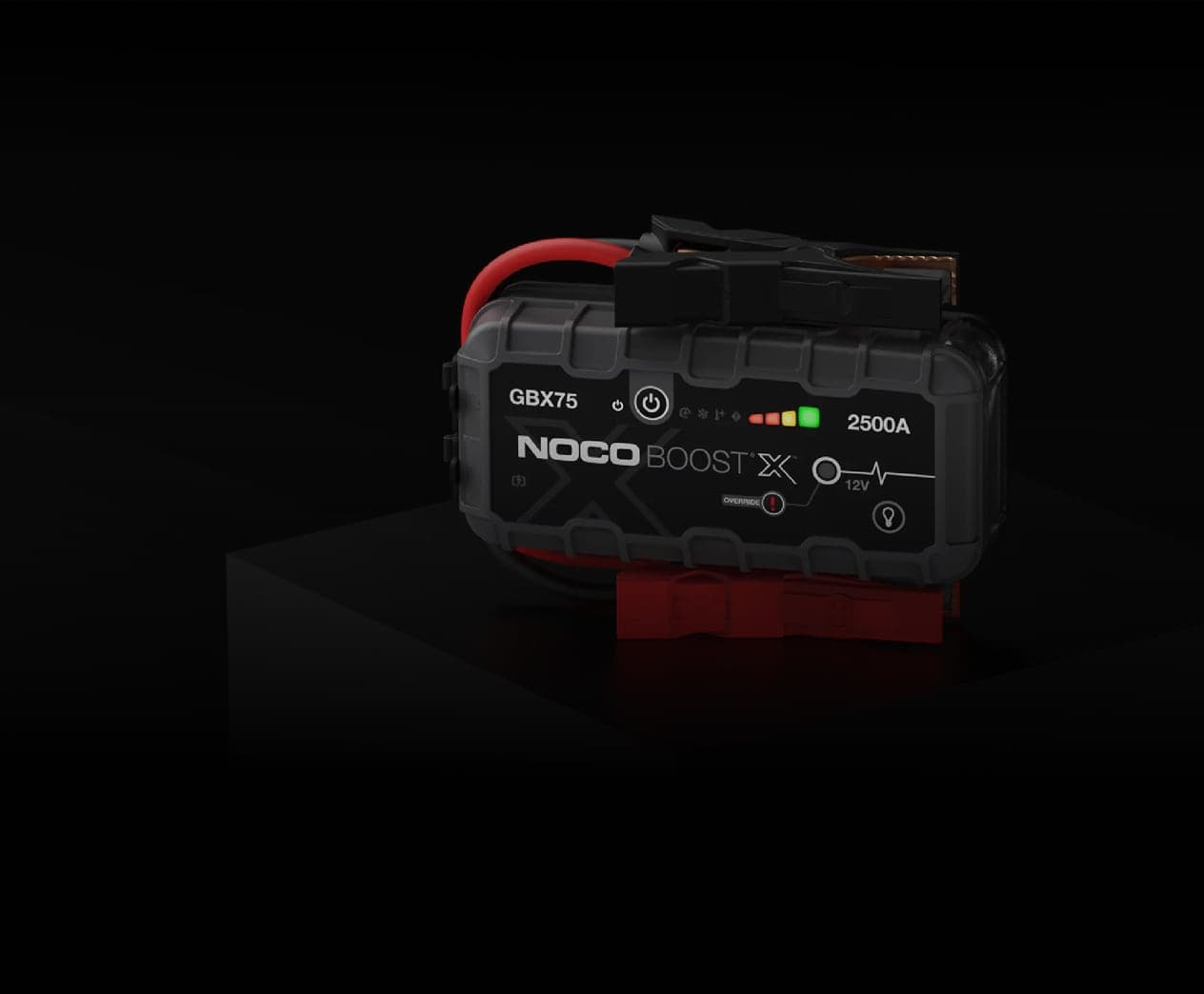
DTC + B2B · Managed services
+38%
accessory attach
A long-running managed-services partnership where every quarter ships more than the last. PDP rebuilds, accessory and replacement-parts catalog, warranty-driven lifecycle.
Read case study 
DTC · Performance
<1s
page loads
Verizon’s connected-car device and app, brought online with page loads held under a second across the buying flow.


DTC · CRO
+33%
conversion
Rack, hitch, and rooftop cargo gear sold direct and through a national dealer network. Conversion rate up 33%.
The big numbers
+30%
Avg. conversion rate lift within 12 months
+50%
Avg. order value lift
<1s
Page load speeds on the storefronts we build
+15%
Avg. revenue lift within 6 months
Before you email another agency
Here are your other options.
There are forty agencies pitching you. Here’s the honest version of what each path actually looks like for an automotive brand.
WE GOT THE WHOLE PACKAGE
There’s a lot more
to this story.
There’s a lot more
to this story.
Design, development, and digital marketing all live under one roof. The same team that builds your store also designs it and runs the paid, lifecycle, and CRO work behind it, so nothing gets lost in a handoff.
The whole pitch in four steps
Here's what happens
after you fill out the form.
after you fill out the form.
Sales replies within one business day. A senior
strategist on the first call. Promise.
Step 01
30-min
discovery callA strategist and account lead who learn your brand, your DTC-vs-installer mix, and the numbers that matter.
Step 02
Free site audit
A written audit of your storefront, fitment infrastructure, installer portal, and lifecycle, in 5 days. Yours to keep.
Step 03
Scoped
proposalScope, timeline, and pricing: fixed-fee or T&M. No surprises.
Step 04
First wins inside
30 daysQuick wins on fitment selector, PDP, and installer portal before month one closes.
THE QUESTIONS YOU HAVE -
Get them out
of the way.
of the way.
Adjacent verticals
If automotive isn't the only fit, try these.






















Not sure which fits?
Let's audit your storefront.
Fill this out. Within one business day, you’ll hear from a senior strategist with either "yes, here’s what’s next" or an honest recommendation for someone better suited to your brand. (Yes, that happens.)